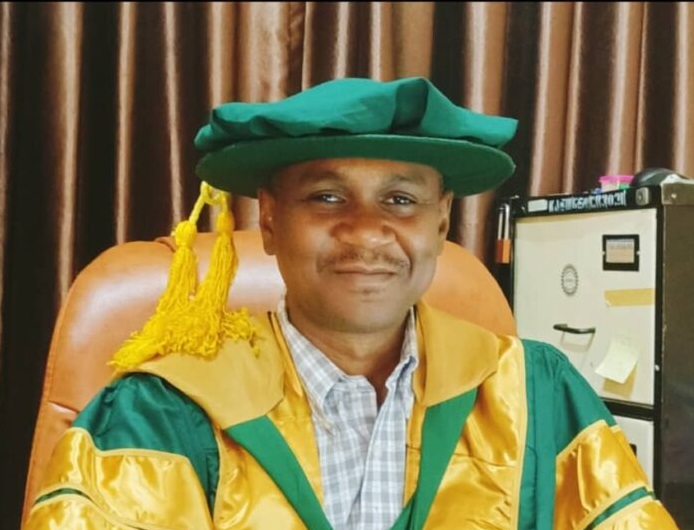
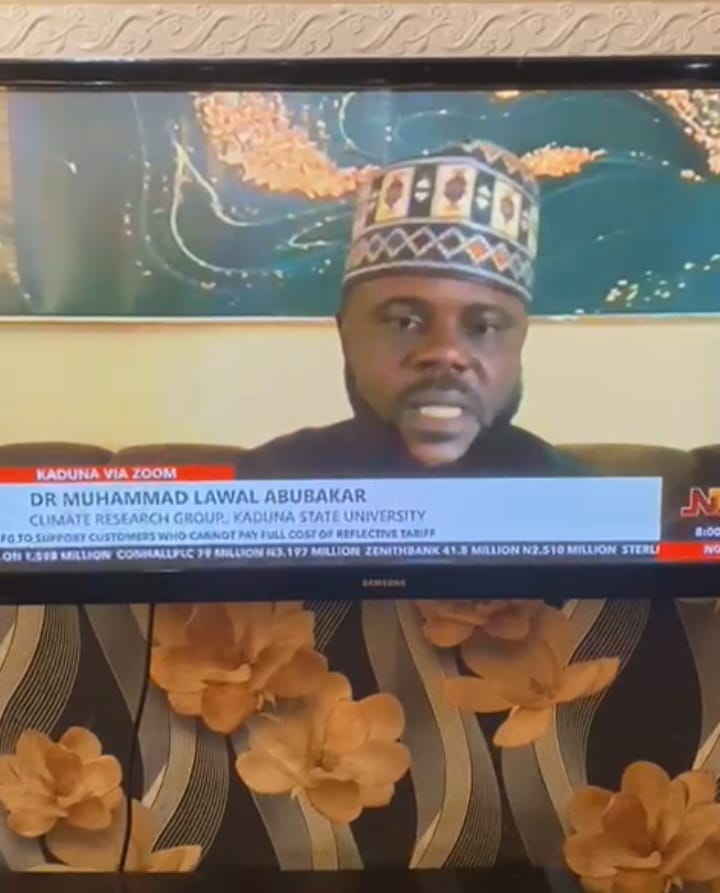
Dr. Muhammad Lawal Abubakar, a member of Kaduna State University’s Climate Research Group (CRG), recently appeared as an expert guest on NTA’s Good Morning Nigeria program. He joined a panel of climate specialists to provide insights into Nigeria’s active participation and strategic positioning at the recently concluded COP30, the 30th United Nations Climate Change Conference held in Belém, Brazil, from November 10–21, 2025.
In the discussion, Dr. Abubakar focused on Nigeria’s newly submitted Third Nationally Determined Contribution (NDC 3.0), which marks a significant step forward in the country’s climate ambitions under the Paris Agreement. Nigeria became the first West African nation, and one of the earliest in Africa, to submit its enhanced NDC 3.0 in 2025, ahead of COP30. This updated pledge commits the country to reducing greenhouse gas emissions by approximately 32% by 2035 (relative to 2018 levels), building on previous targets and aligning with pathways toward net-zero emissions by 2060.
Dr. Abubakar highlighted the journey of NDC 3.0, noting its inclusive development process involving over 50,000 stakeholders, including government, civil society, academia, women, youth, persons with disabilities, and all 36 states. The plan emphasizes economy-wide action across sectors like energy, transport, agriculture, forestry, and industry, with key measures such as:
- Phasing out routine gas flaring by 2030
- Achieving 50% renewable energy in the national power mix by 2030
- Scaling up electric mobility to have nearly one in three vehicles electric by 2035
- Prioritizing just transition principles to support workers and communities affected by the shift from fossil fuels, including retraining programs and support for green entrepreneurship in the oil and gas sector
He addressed the challenges Nigeria faces, including the need to balance a fossil fuel-dependent economy with urgent climate action, while pursuing socio-economic development amid evolving human development indicators. Implementation requires substantial resources, estimated at around $337 billion by 2035, with about 80% ($270 billion) expected from international climate finance, technology transfer, and capacity building, amid global gaps in ambition and funding.
On opportunities, Dr. Abubakar emphasized COP30’s role as a platform for Nigeria to translate NDC commitments into tangible outcomes. He referenced Nigeria’s leadership in submitting early, positioning the country to attract investments, form partnerships, and convert NDC deliverables into pipeline projects, pay-for-performance initiatives, and the unveiling of its Green Transition Roadmap during the conference. Outcomes from COP30, including agreements to scale up climate finance for developing nations and support just energy transitions, offer pathways for Nigeria to advance resilience, adaptation, and sustainable growth.
As a climatologist, Dr. Abubakar’s contributions underscore the Climate Research Group’s role in bridging academic research with national and global policy discussions. His appearance on national television highlights growing efforts to raise public awareness and engage stakeholders on Nigeria’s climate priorities post-COP30.
This discussion reflects Nigeria’s evolving leadership in West African climate action, with eyes now on turning ambitious pledges into on-the-ground impact.